



Die Zukunft des Marktes für Küchenmaschinen: Trends, die gewerbliche Backgeräte im Jahr 2026 prägen
September 01, 2026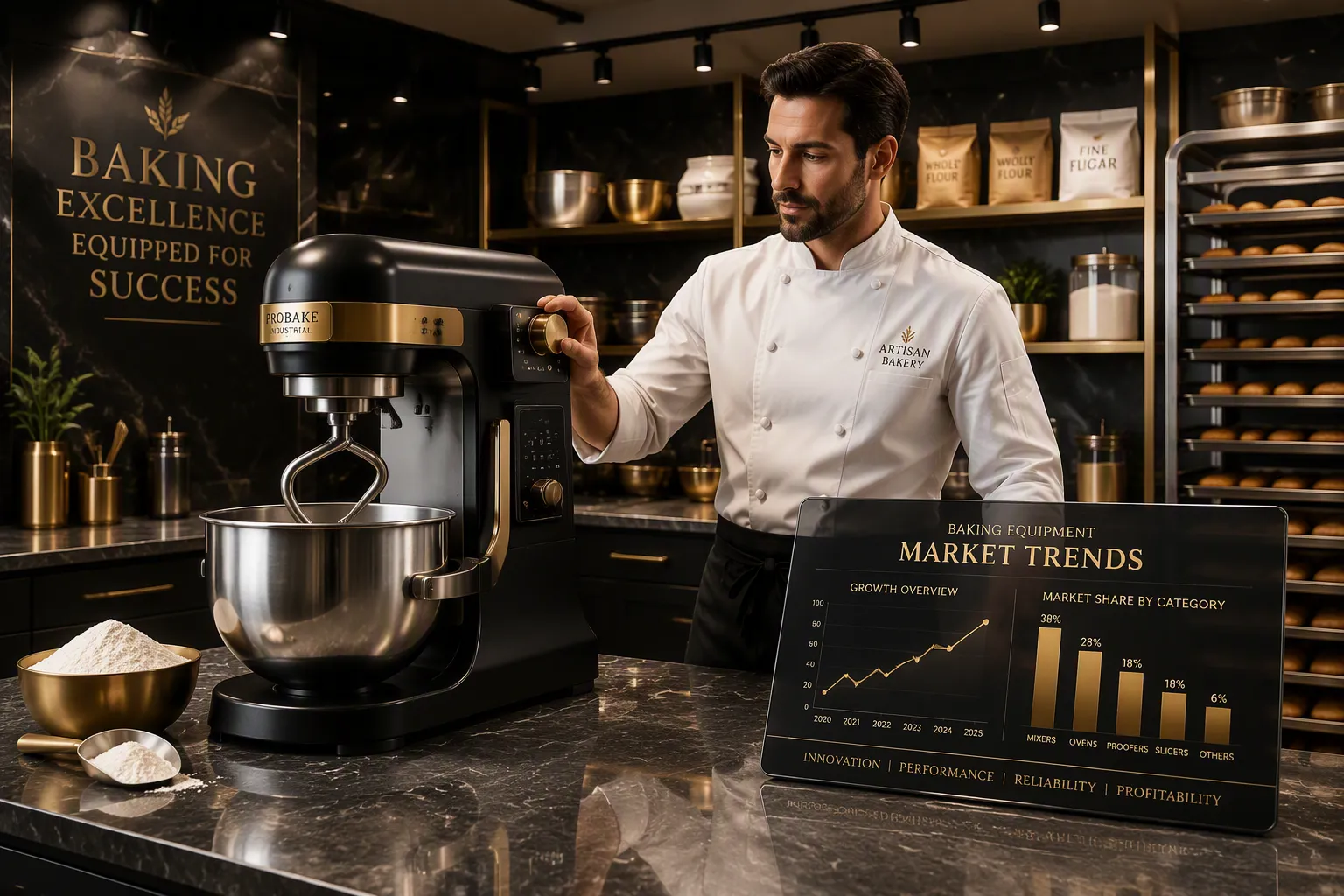
Was sind die wichtigsten Trends, die die Markt für gewerbliche Standmixer Und wie sieht es 2026 aus? Dieser Beitrag beantwortet diese Frage, indem er Markttrends für Küchenmaschinen, technologische Entwicklungen, Nachhaltigkeitsanforderungen und praktische Kaufempfehlungen untersucht. Er bietet Ihnen einen zukunftsorientierten, praxisnahen Leitfaden für Ihre nächste Geräteinvestition.
Der globale Markt für Küchenmaschinen verzeichnet ein starkes Wachstum. Analysten prognostizieren einen Anstieg von 2,26 Milliarden US-Dollar im Jahr 2025 auf 3,63 Milliarden US-Dollar bis 2034, was einer durchschnittlichen jährlichen Wachstumsrate (CAGR) von 5,4 % entspricht. Das Segment für den gewerblichen Einsatz entwickelt sich sogar noch besser: Hier wird ein Marktvolumen von 4,1 Milliarden US-Dollar bis 2032 mit einer CAGR von 6,1 % erwartet. Diese Markttrends spiegeln die sich verändernden Prioritäten in der Backindustrie wider.
Mehrere Faktoren treiben diese Entwicklung an. Gewerbliche Bäckereien benötigen zunehmend vielseitige Geräte, die unterschiedlichste Teigarten verarbeiten können – von handwerklich hergestellten Broten mit hohem Wasseranteil bis hin zu proteinreichen Teigen. Im Bäckereisektor des Jahres 2026 wird Protein als Standard und nicht als optionale Zutat gelten. Daher werden Mischer benötigt, die Pulver und Zusätze einarbeiten können, ohne die Textur zu beeinträchtigen. Effizienz bleibt oberste Priorität und treibt die Betreiber zu Geräten mit hoher Kapazität, die die Chargenzeiten und Arbeitskosten reduzieren. Der breitere Markt für Lebensmittelmixer und -mischer verstärkt diese Entwicklung und wird voraussichtlich allein im Jahr 2026 ein Volumen von 8,9 Milliarden US-Dollar erreichen.
Marktsegment | Wert 2025/2026 | Prognostizierter Wert | CAGR |
|---|---|---|---|
Global Standmixer | 2,26 Mrd. USD (2025) | 3,63 Mrd. USD (2034) | 5,4 % |
Gewerblicher Standmixer | — | 4,1 Mrd. USD (2032) | 6,1 % |
Küchenmixer und -mixer | 8,9 Mrd. USD (2026) | — | — |
Diese Zahlen unterstreichen die klare Nachfrage nach robusten Mischlösungen für Bäckereien, insbesondere nach Modellen, die Leistung mit Programmierbarkeit kombinieren.
Nordamerika und Europa dominieren derzeit den Markt für gewerbliche Rührgeräte, bedingt durch etablierte Bäckereiketten und strenge Lebensmittelvorschriften. Der asiatisch-pazifische Raum entwickelt sich jedoch zur am schnellsten wachsenden Region, angetrieben durch die rasante Urbanisierung, die wachsende Mittelschicht und die zunehmende Verbreitung westlicher Bäckereien. Die Hersteller reagieren darauf, indem sie ihre Produkte an regionale Bedürfnisse anpassen, darunter kompakte Modelle für beengte asiatische Küchen und größere Geräte für den Großbetrieb in Nordamerika.
Die aufstrebenden Märkte Lateinamerikas und des Nahen Ostens bieten ebenfalls erhebliche Chancen. Lokale Bäckereien modernisieren ihre Abläufe und suchen nach Geräten, die gleichbleibende Qualität bei minimalem Energieverbrauch gewährleisten. Diese regionalen Entwicklungen prägen die Produktentwicklungsstrategien und drängen die Hersteller zu modularen Designs, die sich an unterschiedliche Produktionsgrößen anpassen. Das Verständnis dieser Markttrends für Standmixer hilft Käufern, die zukünftige Verfügbarkeit und Preisgestaltung vorherzusehen und sicherzustellen, dass ihre Investitionen in Geräte mit der langfristigen Branchenentwicklung übereinstimmen.
Die Großküche von 2026 benötigt Geräte, die intelligenter, nicht härter arbeiten. Standmixer bieten heute Konnektivität, Programmierbarkeit und Automatisierung, um den sich wandelnden Anforderungen von Bäckereien gerecht zu werden. Das Forschungs- und Entwicklungsteam von Sanlida mit 132 Ingenieuren bringt jährlich 30 neue Modelle auf den Markt und demonstriert damit das hohe Innovationstempo in diesem Sektor. Diese Fortschritte begegnen dem doppelten Druck von Fachkräftemangel und steigenden Qualitätsansprüchen im gewerblichen Backgewerbe.
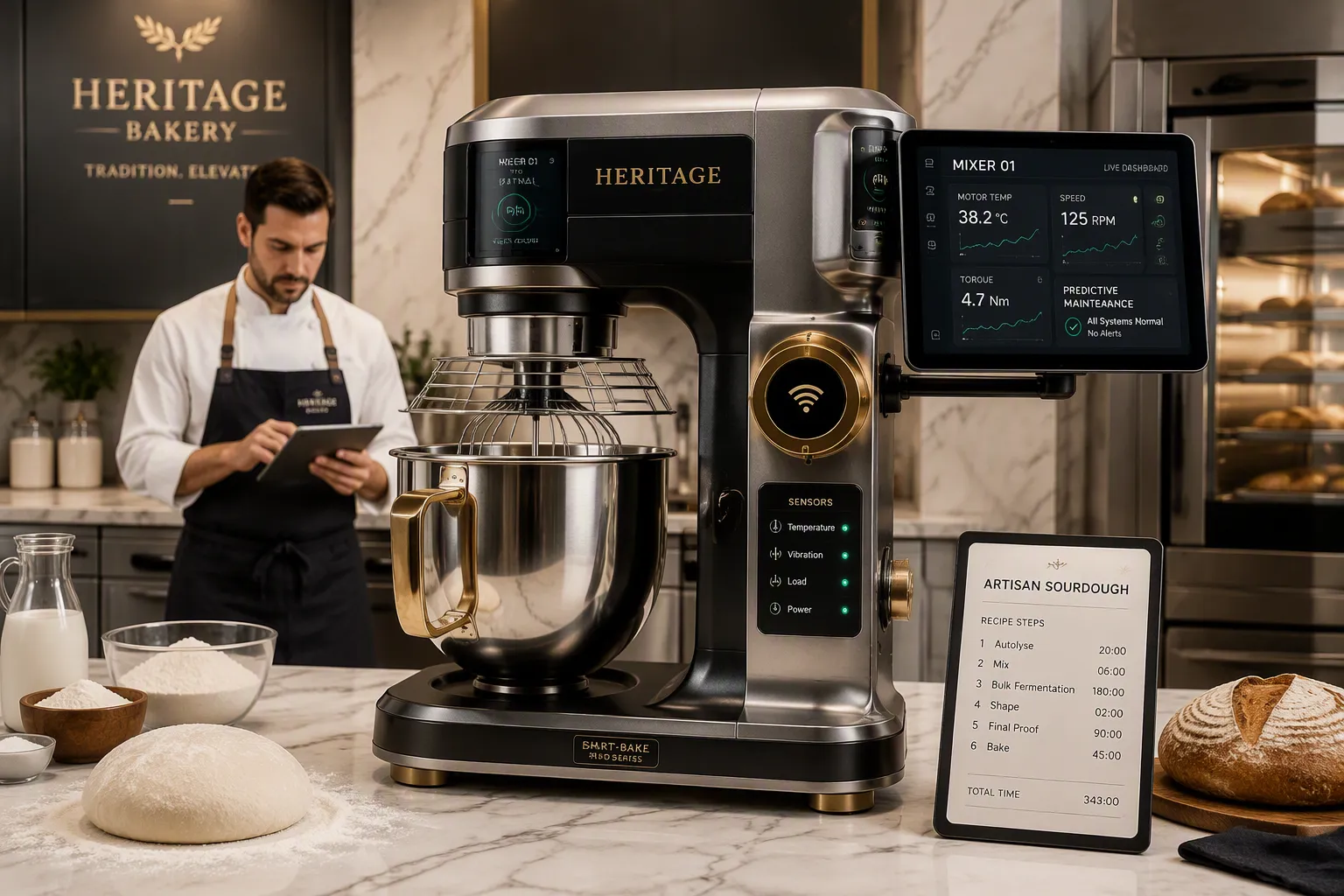
Die Technologie des Internets der Dinge revolutioniert die Interaktion von Bäckereien mit ihren Mischmaschinen. Intelligente Sensoren in modernen Mischern überwachen Motortemperatur, Drehzahl und Drehmoment in Echtzeit. Diese Daten werden an zentrale Dashboards übertragen, sodass Manager mehrere Geräte von einem einzigen Bildschirm aus steuern können. Bediener können Mischparameter per Tablet oder Smartphone fernsteuern und so die Notwendigkeit reduzieren, während längerer Produktionsläufe an jeder Maschine stehen zu müssen.
Vorausschauende Wartung ist ein wesentlicher Vorteil der IoT-Integration. Das System benachrichtigt die Mitarbeiter, sobald eine Komponente Verschleißerscheinungen aufweist, und verhindert so ungeplante Ausfallzeiten während der Produktionsspitzen. Bäckereien können Reparaturen außerhalb der regulären Arbeitszeiten planen, um den Betrieb aufrechtzuerhalten und kostspielige Unterbrechungen zu vermeiden. Die Programmierbarkeit steigert die Effizienz zusätzlich. Bediener speichern spezifische Mischprofile für verschiedene Teigarten und gewährleisten so identische Ergebnisse bei jeder Charge. Dies reduziert die Einarbeitungszeit neuer Mitarbeiter und eliminiert Unsicherheiten beim Mischen. Das System speichert Dutzende von Rezepten und ermöglicht so einen schnellen Wechsel zwischen verschiedenen Produktionsläufen.
Diese Funktionen entsprechen den allgemeinen Markttrends für Küchenmaschinen, die Effizienz und gleichbleibende Qualität in den Vordergrund stellen. Vernetzte Geräte liefern wertvolle Daten, die Bäckereien helfen, ihre Prozesse zu optimieren, Zutatenverschwendung zu reduzieren und die Qualität des Endprodukts zu verbessern. Die Integration des Internets der Dinge (IoT) in gewerbliche Küchenmaschinen ist ein bedeutender Fortschritt für die Branche und ermöglicht datengestützte Entscheidungen im Küchenbetrieb.
Die Automatisierung löst eines der größten Probleme beim Backen: die gleichbleibende Qualität bei der Massenproduktion. Moderne Mischer sind mit speicherprogrammierbaren Steuerungen (SPS) ausgestattet, die präzise Mischzyklen ohne menschliches Eingreifen durchführen. Das System regelt alle Variablen, darunter Mischgeschwindigkeit, -dauer und -richtung. Diese Präzision gewährleistet, dass jede Charge unabhängig von der Erfahrung des Bedieners die gleiche Textur und Konsistenz aufweist.
Hochleistungs-Küchenmaschinen für Lebensmittelbetriebe verfügen heute standardmäßig über Automatisierung. Diese Maschinen verarbeiten große Teigmengen und gewährleisten dabei die gleichen Mischeigenschaften wie bei kleineren Chargen. Das Ergebnis ist ein gleichmäßiger Teig, unabhängig davon, ob die Bäckerei zwanzig oder zweitausend Brote produziert. Die Automatisierung reduziert zudem die körperliche Belastung des Personals und senkt so das Risiko von Ermüdung und Verletzungen bei langen Produktionsläufen. Die Bediener können mehrere Maschinen gleichzeitig überwachen und dadurch die Gesamteffizienz der Küche steigern.
Kompakte automatische Mischer Diese Geräte bieten eine praktische Lösung für Bäckereien mit begrenzter Fläche. Sie bieten dieselbe Programmierbarkeit und Konsistenz wie größere Modelle, benötigen aber weniger Platz. Bäckereien können so ihre Produktion steigern, ohne ihre Kücheneinrichtung zu erweitern. Die Kombination aus Automatisierung und platzsparendem Design macht diese Mischer sowohl für handwerkliche Bäckereien als auch für große Industriebetriebe geeignet. Die kompakte Bauweise geht nicht auf Kosten von Leistung oder Langlebigkeit und gewährleistet die für anspruchsvolle Mischaufgaben erforderlichen Leistungsstandards.
Die Branche setzt zunehmend auf Anlagen, die den Output maximieren und gleichzeitig die Personalkosten minimieren. Automatisierte Mischer erfüllen diese Anforderung, indem sie Charge für Charge gleichbleibende Ergebnisse liefern. Die Bediener können sich anderen Küchenaufgaben widmen, während die Maschine den Mischvorgang selbstständig übernimmt. Diese Umstellung ermöglicht es Bäckereien, ihre Produktionskapazität ohne zusätzliches Personal zu erhöhen und so die betriebliche Effizienz und Rentabilität insgesamt zu steigern.
Energieeffizienz wird 2026 ein entscheidender Faktor für die Geschäftsausstattung von Großküchen sein. Steigende Energiekosten und strengere Umweltauflagen drängen Bäckereien dazu, Maschinen zu bevorzugen, die Leistung bei geringem Stromverbrauch bieten. Die Markttrends für Standmixer spiegeln diese Priorität wider: Betreiber bewerten neben Kapazität und Langlebigkeit auch die Energieeffizienz. Hersteller reagieren darauf mit der Entwicklung von Motoren, die die Leistung pro Watt maximieren und so den Energieverbrauch jeder produzierten Charge reduzieren.
Moderne Gewerbemischer Bürstenlose Motoren wandeln elektrische Energie effizienter in mechanische Leistung um als herkömmliche Motoren. Diese Motoren erzeugen im Betrieb weniger Wärme, wodurch die Küchenlüftung entlastet und die Lebensdauer der Komponenten verlängert wird. Auch bei der Materialauswahl achten die Hersteller auf Nachhaltigkeit. Gehäuse aus Aluminiumdruckguss sind langlebig und am Ende ihrer Nutzungsdauer vollständig recycelbar. Die Kunststoffkomponenten bestehen aus lebensmittelechten Polymeren ohne schädliche Zusatzstoffe und gewährleisten so Sicherheit ohne Kompromisse beim Umweltschutz.
Sanlida-Produkte erfüllen die CE-, RoHS- und FDA-Standards und unterstreichen damit das Engagement für Sicherheit und Nachhaltigkeit. Diese Zertifizierungen bestätigen, dass die Geräte keine verbotenen Gefahrstoffe enthalten und innerhalb der festgelegten Sicherheitsparameter arbeiten. Für Bäckereibesitzer bieten diese Konformitätskennzeichen die Gewissheit, dass ihre Investition sowohl den gesetzlichen Anforderungen als auch den Nachhaltigkeitszielen des Unternehmens entspricht. Die Abwesenheit von Blei, Quecksilber und anderen verbotenen Stoffen vereinfacht die Entsorgung und das Recycling der Geräte, wenn diese ausgemustert werden.
Energieeffiziente Mischer bieten spürbare finanzielle Vorteile, die sich über Jahre im täglichen Betrieb summieren. Eine Großbäckerei, die täglich mehrere Mischvorgänge durchführt, kann ihre jährlichen Stromkosten durch die Wahl von Geräten mit höherer Energieeffizienz deutlich senken. Der geringere Stromverbrauch reduziert zudem die Wärmeentwicklung und damit den Bedarf an Klimaanlagen in den warmen Monaten. Diese Einsparungen wirken sich direkt auf die Gewinnmargen aus, wodurch Effizienz zu einem strategischen Kaufkriterium und nicht zu einem nachträglichen Umweltaspekt wird.
Beim Vergleich von Mischermodellen sollten Betreiber die Energieverbrauchsdaten berücksichtigen. Geräte mit programmierbaren Drehzahlreglern verbrauchen nur so viel Strom wie nötig. Dadurch wird die Energieverschwendung vermieden, die bei Motoren mit fester Drehzahl entsteht, die unabhängig von den Anforderungen der Charge unter Volllast laufen. Dieses intelligente Energiemanagement verlängert die Lebensdauer der Geräte und entlastet die elektrische Infrastruktur. Bäckereien, die eine Erweiterung ihrer Produktionsanlagen oder den Austausch von Geräten planen, sollten energieeffiziente Modelle priorisieren, um ihren Betrieb angesichts steigender Energiekosten und sich ändernder Umweltauflagen zukunftssicher aufzustellen.
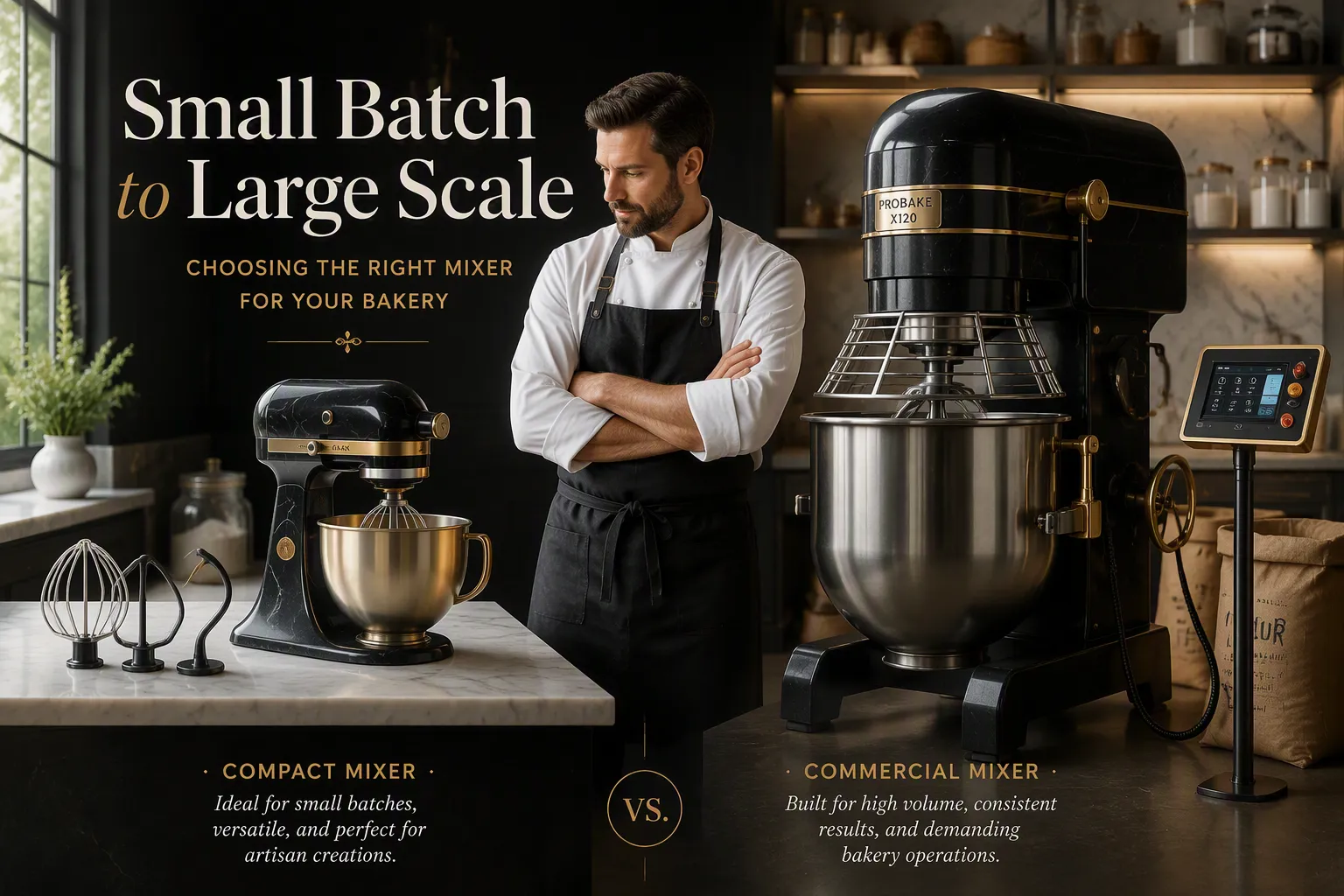
Die Größe eines Bäckereibetriebs bestimmt den benötigten Mischertyp. Kleine Bäckereien benötigen Flexibilität und eine kompakte Bauweise. Sie verarbeiten täglich unterschiedliche Teigarten, von feinem Briocheteig bis hin zu festem Bagelteig. Eine vielseitige Maschine mit austauschbaren Aufsätzen ermöglicht es, mehrere Funktionen mit einem einzigen Gerät zu erfüllen. Dies spart Platz und reduziert die Investitionskosten. Handwerksbäcker schätzen die Möglichkeit, schnell zwischen verschiedenen Arbeitsgängen zu wechseln, ohne separate Maschinen reinigen zu müssen.
Große Industriebetriebe stellen andere Anforderungen. Diese Anlagen verarbeiten pro Schicht Hunderte Kilogramm Teig. Hochleistungsmischer mit feststehenden Schüsseln und drehmomentstarken Motoren sind für den Dauerbetrieb ohne Überhitzung ausgelegt. Die Anlagen müssen sich in automatisierte Produktionslinien integrieren lassen. Die Konsistenz der Chargen ist bei diesem Maßstab entscheidend. Programmierbarkeit und präzise Drehzahlregelung gewährleisten, dass jeder Produktionslauf den gleichen Standard erfüllt.
Parameter | Bedarf einer kleinen Bäckerei | Großgewerbebedarf |
|---|---|---|
Losgröße | 5–20 Pfund | 50–200+ Pfund |
Motorrad-Arbeitszyklus | Zeitweise | Kontinuierlich |
Grundfläche | Kompakt | Ausstellungsmodell in Originalgröße |
Vielseitigkeit der Befestigung | Hoch | Medium |
Budgetsensitivität | Hoch | Mäßig |
Sanlida bietet über 200 Artikel in beiden Kategorien an. Das Produktsortiment umfasst sowohl professionelle Küchenmaschinen für den professionellen Einsatz als auch kompakte Modelle für kleinere Küchen. Dank dieser Vielfalt können Anwender die Geräte auswählen, die genau ihrem Produktionsvolumen und ihren räumlichen Gegebenheiten entsprechen.
Bäckereien, die für 2026 Standmixer evaluieren, sollten der Programmierbarkeit Priorität einräumen. Geräte, die mehrere Mixprofile speichern, reduzieren menschliche Fehler. Bediener können präzise Geschwindigkeits- und Zeiteinstellungen für jedes Rezept abrufen. Diese Konstanz verbessert die Produktqualität und verkürzt die Einarbeitungszeit für neue Mitarbeiter. Digitale Displays mit intuitiver Bedienung beschleunigen den Lernprozess.
Langlebigkeit ist in Großküchen unerlässlich. Gehäuse aus Metallguss, verstärkte Getriebe und leistungsstarke Motoren unterscheiden professionelle Geräte von Modellen für den Privatgebrauch. Die Geräte müssen hohen Belastungen und dem Dauerbetrieb standhalten. Die Einhaltung internationaler Standards wie CE, RoHS und FDA gewährleistet Sicherheit und Qualität.
Energieeffizienz führt zu messbaren Kosteneinsparungen. Drehzahlvariable Antriebe verbrauchen nur dann Strom, wenn er benötigt wird. Der Motor liefert bei schwerem Teig sein volles Drehmoment, reduziert aber die Leistung bei leichteren Knetvorgängen. Diese intelligente Funktion senkt die Stromkosten und verlängert die Lebensdauer der Geräte.
Individualisierungsdienste gewinnen zunehmend an Bedeutung. Die Möglichkeit, maßgeschneiderte Küchengeräte für globale Marken zu beschaffen, ermöglicht es Bäckereien, Geräte zu erhalten, die optimal auf ihre spezifischen Rezepte und ihr Branding abgestimmt sind. OEM- und ODM-Fähigkeiten erlauben es Kunden, Farbschemata, Bedienoberflächen und Anschlusskonfigurationen anzupassen. Diese Flexibilität erweist sich als wertvoll für Filialbetriebe, die ihre Geräte an mehreren Standorten standardisieren. Jedes Gerät wird exakt auf die Produktionsanforderungen der Bäckerei zugeschnitten geliefert, ohne Kompromisse bei der Leistung einzugehen.
Die Bäckereimaschinenbranche im Jahr 2026 konzentriert sich auf drei Kernziele: maximale Flächennutzung, minimaler Energieverbrauch und gleichbleibende Produktqualität. Hersteller entwickeln neue Modelle mit kleinerer Stellfläche, ohne dabei das Fassungsvermögen der Rührschüsseln zu reduzieren. Dadurch können Bäckereien ihre Produktionsmenge auf der bestehenden Fläche steigern. Vertikale Mischstationen und Wandgeräte gewinnen in urbanen Bäckereien, wo die Immobilienkosten stetig steigen, an Bedeutung.
Die Markttrends für Küchenmaschinen deuten auf einen Trend hin zu multifunktionalen Geräten. Gastronomen suchen Maschinen, die Mixen, Schlagen und Kneten in einem Gerät vereinen. Diese Vielseitigkeit reduziert die Anzahl der benötigten Küchengeräte. Modulare Aufsätze erweitern die Funktionalität, ohne dass zusätzliche Motorgehäuse erforderlich sind. Bäckereien investieren in Systeme, die sich an wechselnde Menüangebote anpassen, anstatt für jede Aufgabe separate Maschinen anzuschaffen.
Energierückgewinnungssysteme stellen eine weitere innovative Entwicklung dar. Diese Systeme fangen die beim Motorbetrieb entstehende Wärme auf und nutzen sie für andere Zwecke in der Küche. Einige Betriebe verwenden diese zurückgewonnene Energie beispielsweise zum Vorwärmen von Wasser oder zum Halten der Temperatur in Gärschränken. Durch diese Integration wird der Gesamtenergieverbrauch im gesamten Betrieb reduziert.
Käufer sollten vor der Auswahl eines Mischermodells drei entscheidende Faktoren berücksichtigen: Kapazität, Energieeffizienz und Skalierbarkeit. Die Kapazität muss dem aktuellen Produktionsvolumen entsprechen und gleichzeitig das erwartete Wachstum ermöglichen. Eine zu kleine Maschine führt in Spitzenzeiten zu Engpässen. Ein zu großes Gerät verschwendet Energie an Tagen mit geringerer Produktion. Betreiber sollten durchschnittliche Chargengrößen und Spitzenbedarfe berechnen, bevor sie verschiedene Modelle vergleichen.
Die Energieeffizienzklasse hat direkten Einfluss auf die langfristigen Betriebskosten. In Großküchen laufen Rührgeräte täglich stundenlang. Ein besonders effizientes Gerät spart im Vergleich zu einem weniger effizienten Modell jährlich Tausende von Euro. Käufer sollten daher die Energieverbrauchsdaten der Hersteller anfordern und die Werte verschiedener Modelle vergleichen.
Skalierbarkeit gewährleistet, dass die Anlagen auch bei wachsendem Betrieb ihren Wert behalten. Dank modularer Bauweise können Bäckereien Anbauteile hinzufügen oder Komponenten aufrüsten, ohne die gesamte Anlage austauschen zu müssen. Die Anpassungsservices von Sanlida ermöglichen es Betreibern, Funktionen exakt an ihre Produktionsanforderungen anzupassen. Dieser Ansatz beugt vorzeitiger Veralterung vor und maximiert die Kapitalrendite.
Die richtige Küchenmaschine fungiert als strategisches Anlagegut, das mit dem Unternehmen wächst, und nicht als Wegwerfartikel, der alle paar Jahre ersetzt werden muss.
Betreiber, die diese Faktoren gründlich analysieren, positionieren ihre Bäckereien für nachhaltiges Wachstum bis 2026 und darüber hinaus.
Marktwachstum, intelligente Technologie und Energieeffizienz prägen die Landschaft der Standmixer im Jahr 2026. Diese Trends beeinflussen maßgeblich die Kaufentscheidungen zukunftsorientierter Bäckereien. Betriebe, die Programmierbarkeit, Vernetzung und nachhaltigen Betrieb priorisieren, sichern sich langfristigen Erfolg. Der richtige Mixer ist ein strategisches Asset, das für gleichbleibende Qualität sorgt, Kosten senkt und mit dem Produktionsbedarf skaliert. Wer heute klug investiert, sichert sich morgen Wettbewerbsvorteile.
Die Bediener sollten die durchschnittlichen Losgrößen und die Produktionsspitzen berechnen. Eine zu kleine Anlage führt in Spitzenzeiten zu Engpässen. Eine zu große Maschine verschwendet an ruhigeren Tagen Energie. Die Anpassung der Kapazität an das realistische Produktionsvolumen beugt beiden Problemen vor.
Programmierbare Mischer speichern präzise Geschwindigkeits- und Zeitprofile für jedes Rezept. Die Mitarbeiter können diese Einstellungen sofort abrufen, wodurch unnötiges Rätselraten entfällt. Jede Charge erhält die gleiche Textur und Struktur. Dies reduziert den Schulungsaufwand und minimiert menschliche Fehler bei der Produktion.
Energieeffiziente Motoren verbrauchen nur so viel Strom wie nötig und senken so die Stromkosten erheblich. Die geringere Wärmeabgabe reduziert zudem den Bedarf an Klimaanlagen. Diese Einsparungen summieren sich täglich, wodurch Effizienz zu einer strategischen Finanzentscheidung wird. Markttrends für Standmixer zeigen, dass Betreiber diesem Faktor bei der Geräteerneuerung Priorität einräumen.



Tel : +86-755-8450 0805
E-Mail : sale@sanlidaco.com
No.27,Jiangjunmao lndustrial area, Wulian community, Longgang street,Longgang district, Shenzhen City, Guangdong Province, China 518083
© 2026 Shenzhen Sanlida Electrical Technology Co.,Ltd
